Why a Meal Plan Matters – and What Trips People Up
A meal plan is the bridge between nutrition goals and the reality of a busy kitchen. When you know exactly what you’ll eat each day, you spend less time deciding, waste fewer ingredients, and keep blood‑sugar spikes at bay. Most people stumble at the first hurdle: they either over‑engineer the plan (listing every spice and portion size) or under‑engineer it (leaving whole meals to chance). The sweet spot is a framework that’s detailed enough to guide you, but flexible enough to adapt to a changing schedule.
Step by Step
- Define Your Core Goal Write a single sentence that captures the purpose of the plan—e.g., “Maintain a 2,200‑calorie intake while boosting protein to 120 g per day.” This sentence will filter every food choice you make.
- Audit Your Calendar Pull a week‑long view of work, workouts, and social commitments. Highlight the days with early meetings, late‑night events, or gym sessions. Knowing when you’ll be home (or not) determines how many cooked meals you can realistically prepare.
- Set Macro Targets per Meal Break your daily macro goal into breakfast, lunch, dinner, and snacks. For a 2,200‑calorie plan, you might allocate 25 % to breakfast, 30 % to lunch, 35 % to dinner, and 10 % to two snacks. Write these percentages as grams (protein, carbs, fat) so you can quickly assess a recipe’s fit.
- Choose a Repeating Core Set of Foods Pick 8–12 items that cover protein, veg, fruit, grain, and healthy fat. Example: chicken breast, canned tuna, eggs, quinoa, brown rice, broccoli, spinach, carrots, apples, berries, avocado, and almonds. Having a limited pantry reduces decision fatigue and shopping trips.
- Map Each Core Food to a Day‑Specific Meal Create a simple matrix: rows = days, columns = meals. Fill each cell with one of your core foods, ensuring variety (e.g., chicken on Monday lunch, tuna on Tuesday lunch). Pair each protein with a grain and a vegetable; add a fruit or nut for snacks.
- Draft a Quick Recipe Sheet For every protein‑grain‑veg combo, write a 3‑step recipe template: a. Prep – wash, chop, or marinate (5 min). b. Cook – stovetop, oven, or batch‑cook method (15–20 min). c. Assemble – portion into containers, sprinkle with a pre‑measured spice blend. Keep the total cooking time under 30 minutes for any single meal.
- Review and Adjust After the first draft, total the calories and macros for each day. If breakfast exceeds its 25 % share, swap a high‑fat item for a lower‑calorie fruit. If a day has two identical lunches, rotate the protein to the next day. This fine‑tuning step prevents hidden imbalances.
A Simple Structure to Follow
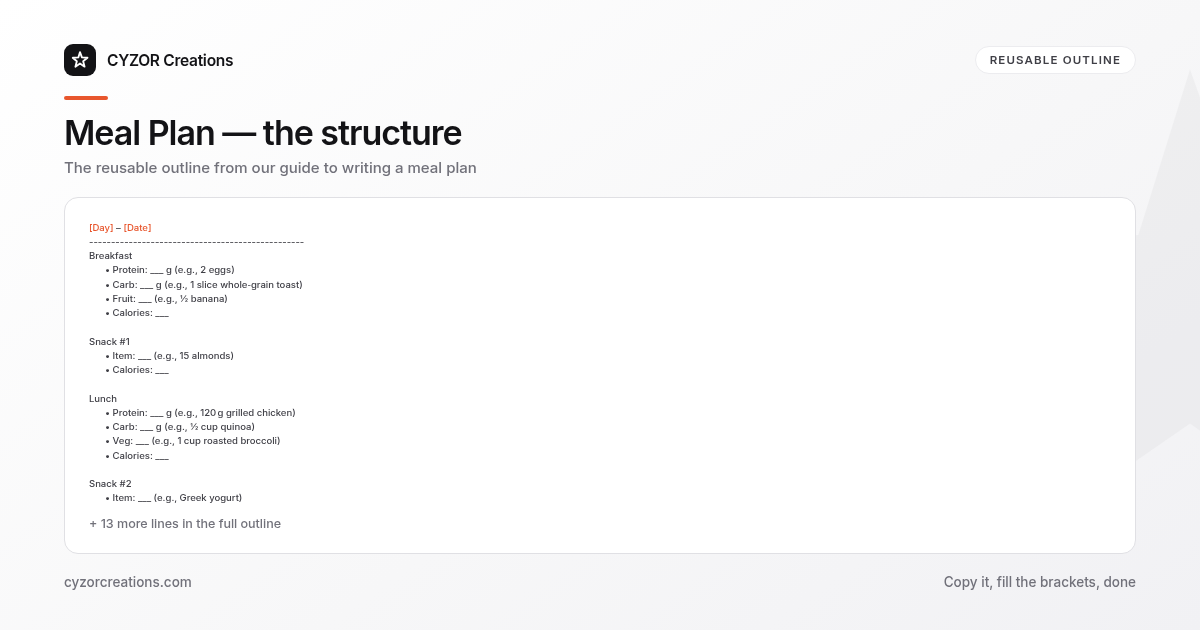
[Day] – [Date]
-------------------------------------------------
Breakfast
  • Protein: ___ g (e.g., 2 eggs)
  • Carb: ___ g (e.g., 1 slice whole‑grain toast)
  • Fruit: ___ (e.g., ½ banana)
  • Calories: ___

Snack #1
  • Item: ___ (e.g., 15 almonds)
  • Calories: ___

Lunch
  • Protein: ___ g (e.g., 120 g grilled chicken)
  • Carb: ___ g (e.g., ½ cup quinoa)
  • Veg: ___ (e.g., 1 cup roasted broccoli)
  • Calories: ___

Snack #2
  • Item: ___ (e.g., Greek yogurt)
  • Calories: ___

Dinner
  • Protein: ___ g (e.g., 150 g baked salmon)
  • Carb: ___ g (e.g., ¾ cup sweet potato)
  • Veg: ___ (e.g., mixed greens with vinaigrette)
  • Calories: ___

Daily Totals
  • Calories: ___
  • Protein: ___ g
  • Carbs: ___ g
  • Fat: ___ g
Print this template once per week and fill it in with the matrix you built in step 5. The layout forces you to see each macro at a glance and makes grocery lists trivial.
Common Mistakes to Avoid
- Skipping the Calendar Audit – Planning meals without knowing when you’ll actually eat leads to missed lunches or cold dinners.
- Over‑complicating Recipes – A 10‑step sauce that takes 45 minutes defeats the purpose of a plan meant to save time.
- Ignoring Portion Variability – Using the same portion size for a sedentary day and a high‑intensity training day creates energy gaps.
- Relying on “Free‑For‑All” Snacks – Leaving snack choices open invites high‑sugar bars or chips that blow the macro budget.
- Forgetting to Log Calories – Without a quick check (the template’s “Daily Totals”), you won’t notice when a meal pushes you over the target.
A Short Example
Monday – 03/04
-------------------------------------------------
Breakfast
  • Protein: 2 eggs (12 g)
  • Carb: 1 slice whole‑grain toast (15 g)
  • Fruit: ½ banana (13 g)
  • Calories: 310

Snack #1
  • 15 almonds
  • Calories: 105

Lunch
  • Protein: 120 g grilled chicken (30 g)
  • Carb: ½ cup quinoa (20 g)
  • Veg: 1 cup roasted broccoli (5 g)
  • Calories: 420

Snack #2
  • Greek yogurt (150 g, 12 g protein)
  • Calories: 130

Dinner
  • Protein: 150 g baked salmon (34 g)
  • Carb: ¾ cup sweet potato (30 g)
  • Veg: mixed greens with 1 tsp olive oil vinaigrette (2 g)
  • Calories: 460

Daily Totals
  • Calories: 1,425
  • Protein: 108 g
  • Carbs: 100 g
  • Fat: 45 g
The numbers stay within a 2,200‑calorie budget, leaving room for a modest evening snack or a slightly larger breakfast on a weekend.
Pro Tips
- Batch‑Cook Grains on Sunday – Cook a single pot of quinoa and a separate pot of brown rice. Store them in airtight containers; they keep fresh for four days, cutting daily prep time in half.
- Use a “Macro‑First” Shopping List – Organize your grocery list by protein, carb, and veg sections. This prevents wandering aisles and ensures you pick the exact quantities you need.
- Rotate One Core Food per Week – Swap chicken for turkey, quinoa for farro, or broccoli for cauliflower every seven days. Rotation keeps flavor interesting without expanding the pantry.
- Pre‑Portion Snacks in Zip‑Lock Bags – Measure 15 almonds, a single apple, or a 150‑g yogurt into individual bags. When a snack craving hits, you grab the bag—no weighing, no guesswork.
- Add a “Buffer Meal” – Designate one dinner per week as a flexible option (e.g., “stir‑fry with whatever veg is left”). This safety net absorbs unexpected leftovers and reduces waste.
Follow the steps, keep the template handy, and treat the plan as a living document—adjust it as your schedule shifts, and the habit will become second nature.